· 5 min read
What Mastery Learning Looks Like in Practice
How to set a mastery target, give corrective feedback that teaches, and offer a fair second attempt before learners move on.
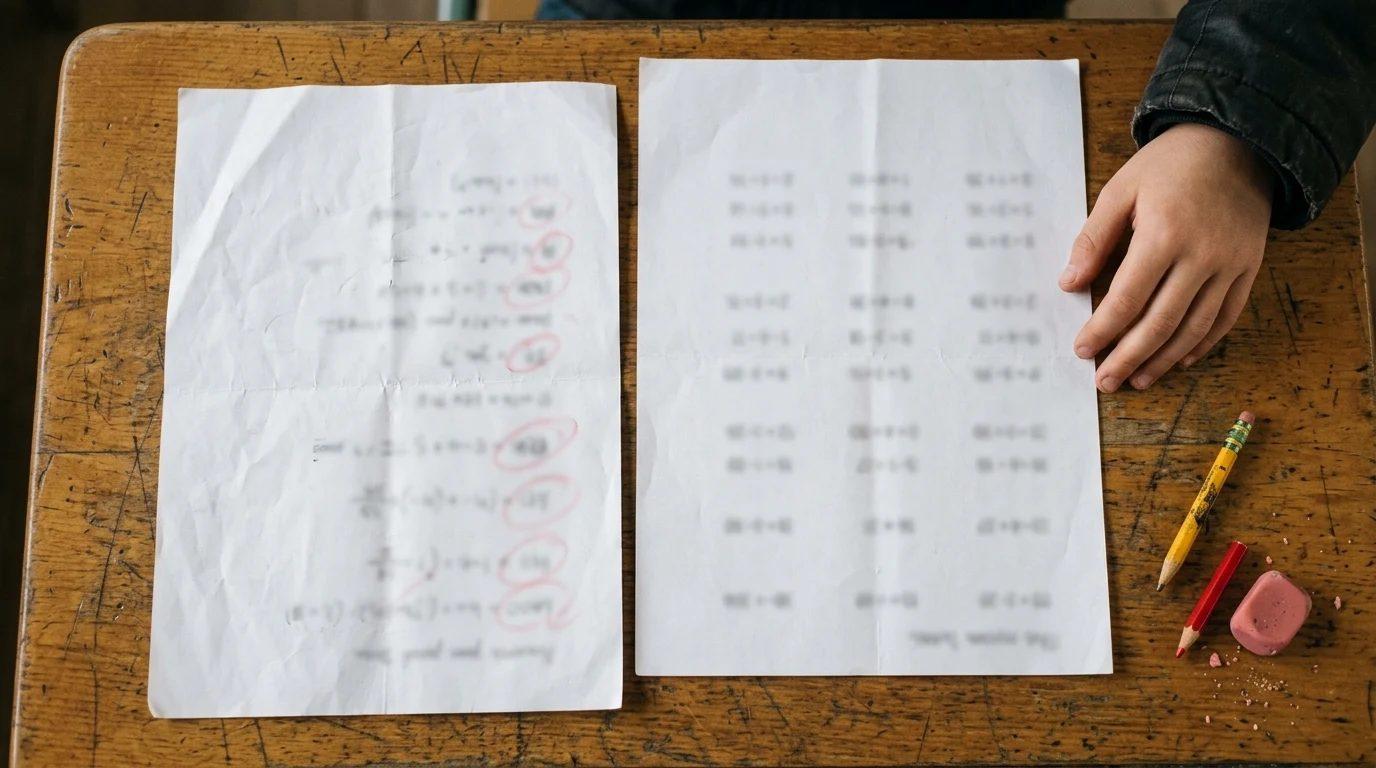
A learner works through every problem in a set and gets six of ten right. The assignment is marked complete, and tomorrow's lesson assumes they understood it.
Completion only records that the work happened. It says little about whether the learner is ready for what comes next, and when the two get treated as the same thing, small gaps tend to resurface a few units later, bigger and harder to trace.
The original idea: a fixed goal and flexible time
Benjamin Bloom proposed mastery learning in the late 1960s, arguing that most learners can reach a high standard if they get the time and help they need. Typical instruction works the other way around: everyone gets the same week, and achievement varies. Mastery learning fixes the standard and lets time and support vary.
Thomas Guskey's review of Bloom's work lays out the cycle. Teach the unit, give a short formative check, provide corrective instruction for learners who need it and enrichment for those who don't, then give a second check on the same goals. That second check is the step schools most often skip.
The approach has decades of evidence behind it. A meta-analysis by Kulik, Kulik, and Bangert-Drowns found positive effects on examination performance, with stronger effects for learners who started out further behind.
Make the target visible
Learners should know the target before they start. "Reach 80 percent on the problems and the quiz" gives them something to aim for and something to talk with you about. Many mastery programs set the bar around 80 percent, which leaves room for a careless slip while still showing that a learner can do most of the work alone.
Be clear about what counts toward it. When every practice attempt is scored, learners start playing it safe on the very problems meant for trying things out. Score the independent work at the end and leave practice unscored.
Teach the correction differently
When a learner misses the target, repeating the same lesson more slowly rarely helps. Corrective instruction works better from a new angle: a different example, a drawing instead of symbols, or feedback aimed at the exact step that went wrong, such as "You found the common denominator correctly. Check what happened to the numerator of the second fraction." Follow it with a few problems on that step.
Much of the learning in mastery learning happens here. The first check shows you the gap, and the correction is your chance to close it.
Make the second attempt a new attempt
If the second check repeats the first, a learner can pass by remembering answers. Use parallel problems instead, with the same skill and different numbers or contexts. A learner who solves problems they haven't seen before has shown you that the skill transferred.
Set a sensible limit on attempts and add new support between them. Retrying the same problems with no new help turns into guessing, and learners work that out quickly.
Keep rewards separate from mastery
Points and badges can encourage practice, but they shouldn't decide when a learner moves on. If collecting enough points unlocks the next lesson, you're measuring persistence. Let rewards recognize effort, and let mastery mean the learner can do the skill well enough to build on it.
How PushPad handles mastery
Each PushPad lesson pad moves through vocabulary, an explanation, an example, an activity, and practice before Problems and a Quiz. Mastery is the equal-weight average of the learner's Problems and Quiz percentages, with a target of 80 percent by default. Practice doesn't count toward that score, and the Quiz doesn't show which answers are correct until the learner submits it.
When an assignment requires mastery before moving on, the next pad unlocks once the learner reaches the target. Learners see their score and the target, review the feedback, and try again. Experience points and achievements are tracked separately from mastery.
If a learner keeps missing the target, you can add a focused pad for them or adjust their deadline before they move on. PushPad keeps each attempt, so you can see where the reasoning breaks down, and the decision about what comes next stays with you, as described in adaptive learning that educators control.
Common questions
How many retakes should learners get?
Enough to learn from feedback, and few enough that each attempt counts. One or two retakes is a common choice, with corrective work required in between. If a learner keeps missing, the next step is usually more instruction, such as another worked example and guided practice, rather than another attempt.
Is mastery learning the same as standards-based grading?
They're related but different. Standards-based grading reports progress on specific skills instead of averaging everything into one grade. Mastery learning is a way of teaching: teach, check, correct, and check again before moving on. Many schools use the two together.
Research behind this article
- Guskey: Closing achievement gaps by revisiting Bloom's "Learning for Mastery," 2007. Describes the formative assessment, corrective instruction, and second assessment at the center of mastery learning.
- Kulik, Kulik, and Bangert-Drowns: Effectiveness of mastery learning programs, 1990. A meta-analysis of controlled evaluations of mastery learning programs.
- Education Endowment Foundation: Mastery learning. A summary of research on mastery learning approaches.
The examples illustrate the teaching process. They are not drawn from specific learners.
Put this into practice with lesson pads you control.